
Material Testing for Longer Ray5 10W & 5W

Longer Ray5 5W and Longer Ray5 10W allow you to engrave and cut different types of materials, quickly and easily. However, for each type of processing it is necessary to set different parameters regarding power and speed, precisely because each type of material reacts differently to the laser beam.

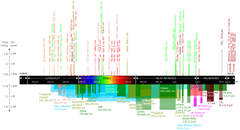
To have a reference about what power and speed to adopt for each type of material, there is a fairly complete table accurately reporting the best parameters to use.

about what power and speed to adopt for each type of material

However, the table can only be understood as a general reference; in fact, assuming you want to cut the basswood with Longer Ray5 10W, the recommended parameter is 100% power & 350 mm/min speed, but there are various types of basswood, and each one reacts differently during cutting, so it is not said that these parameters are perfect for each type of basswood, since some basswood could be burned instead of simply cut or not cut at all.

In order to obtain the correct parameters for the type of basswood you intend to cut, Lightburn has a powerful material test tool, which allows you to quickly determine the most specific and correct parameters. From the Lightburn home screen, select Laser Tools – Material Test; this screen will open:

select Laser Tools – Material Test

First, set the Count value to 5 for Vertical and Count to 4 for Horizontal; Also, set Height and Width to 5.00 mm.

Since the recommended parameters for cutting the basswood are 100% power & 350 mm/min speed, you can set a range between 100 and 500 mm/min for speed and a range between 50% and 80% for power (so as to avoid stressing the laser with 100% power).

Next, proceed with Edit Text Setting:

Edit Text Setting

This screen is used to engrave the labels of the test table. Since it is an engraving, set 3000 mm/min speed and 50% Power; Also, set Mode Fill.
Confirm by pressing OK.

At this point, proceed with Edit Material Settings:

Edit Material Settings

In this screen you can set the method of processing the material; since it is a matter of cutting, select Mode Line, and possibly set Number of Passes to 1 or more.
Confirm by pressing OK.

Once back on the main screen, press Save Gcode to export the test file, copy it to the microSD, and start testing on Longer Ray5.

When Ray5 has completed the job, reviewing the table will help you determine which parameters are best to set.

Similarly, if you want to proceed with an engraving test instead of cutting, open the Material Test screen. Since the recommended parameters for engraving the basswood are 35% Power & 3000 mm/min speed, set the testing range as shown in the image below:

set the testing range

On the Edit Material Settings screen, since this is an engraving, select Mode Fill:

the Edit Material Settings screen select Mode Fill

Once back on the main screen, press Save Gcode to export the test file, copy it to the microSD and start testing on Longer Ray5.

When Ray5 has completed the job, reviewing the table will help you determine which parameters are best to set.

Note that, before exporting the Gcode, both for a cut test and for an engraving test, you can always select Preview, which allows you to see in advance how the final result will look.

Lightburn Preview

Above is the introduction of parameter settings and material testing , hope it can help you. If you still have any questions during the operation, please visit our Support Page. Our knowledgeable staff is happy to assist you and your team with any questions.

The Longer Laser RAY5 Series is capable of engraving a wide range of materials, including plywood, basswood, hardwood, pinewood, acrylic, kraft paper, stainless steel, aluminum alloy, ceramics, and more. Additionally, the Longer RAY5 can cut materials such as basswood, acrylic, bamboo, kraft paper, and more.

With its powerful engraving and cutting capabilities, it transcends boundaries to become the best engraving machine and the best laser cutter for a variety of materials. Seamlessly transition from a wood laser cutter to a metal laser engraver, or even become a master jewelry engraver. Discover boundless, unlimited potential with the Longer Laser RAY5 Series.


Read more

By Software | May 30, 2023
Air Assist Kit installation for Longer Ray5 10W & 5W

Visible light and laser beam have in common the same nature, as both are composed of photons, however the difference between them is in the fact that visible light has an optically isotropic propagation (that is, it propagates identically in all directions) while in the laser all the energy is concentrated within a single beam of very small section. Therefore, when the laser hits matter, it is instantly able to radiate a great power in a very small area, causing a sudden and rapid increase in temperature that alters the state of matter.

Laser engraving machines, such as Longer Ray5, are able to emit a laser beam that instantly transforms the state of matter by combustion, and the contrast between the laser-subjected surface and the surrounding surface creates the visual effect commonly called Laser Engraving. However, the energy hitting a single point is not limited to that point, but the heat generated is also transmitted to the areas surrounding the point, causing the typical burning effect of laser processing.

In order to avoid or reduce this effect, an air assist mechanism can be used, which consists of a compressor capable of continuously blowing pressurized air directly onto the area subjected to the laser. In this way, the heat exchanged between the laser area and the surrounding area is mitigated by the fresh air of the Air Assist compressor, thus avoiding the burnt effect around the laser engraving. In addition, the air blown on the engraving zone cancels the heat exchange with the surrounding areas but does not damage the engraving ability of the laser beam. A simple example to understand this phenomenon can be this: if on a summer day with the sun high in the sky you go to the sea, if there is wind, then you feel cool, while if there is no wind, then you feel hot, but in both cases the sun causes burns to the skin in the same way.

Longer Ray5 10W Air Assist installation

The longer Ray5 10W has an official Air Assist kit that consists of two parts, the nozzle kit and the air compressor, available at the following link: https://www.longer3d.com/products/air-assist-set .

Installing the Longer Air Assist on the 10W laser module is really easy; just follow the steps below:

  • First, proceed to disassemble the laser module from the rest of the machine

  • Install the metal nozzle on the laser module

  • Connect a rubber hose between the metal nozzle and the pressure regulator, and connect another part of the rubber hose to the regulator inlet

  • Connect the inlet pipe of the regulator to the outlet of the air compressor

    • Finally, install the laser module on the Ray5, activate the compressor switch and start an engraving from the Longer Ray5 display

Longer Ray5 5W Air Assist installation

To proceed with the installation of the Air Assist kit on the Longer Ray5 5W, it is necessary to purchase, as for the 10W version, the kit consisting of the nozzle kit and the air compressor, available at the following link: https://www.longer3d.com/products/air-assist-set . However, the metal nozzle included inside the kit is compatible with 10W module only; therefore, it is necessary to have a 3D printer to print with PLA or PETG the following nozzle:https://www.thingiverse.com/thing:5585296 .

Installing the Longer Air Assist on the 5W laser module is really easy; just follow the same steps as the installing method for the 10W laser module, but install the 3D-printed nozzle on the laser module instead of the metal nozzle. After that, as mentioned, just follow the same steps as shown for installation on the 10W module.

Conclusions

The use of air assist not only increases the engraving quality but can also increase the laser's cutting capacity thanks to the possibility of removing smoke and combustion debris thanks to the continuous breath of air; without air assist, these would end up settling on the laser lens, hindering the output laser beam of the module. Whether for hobbyist or professional use, Longer Air Assist is absolutely recommended if you want to achieve the maximum performance offered by Longer Ray5 10W and Longer Ray5 5W.

https://www.longer3d.com/collections/laser-engraver

By Software | May 9, 2023
Longer Honeycomb Working Table - LONGER
Longer Honeycomb Working Table

Laser engraving quality is affected by more than just the laser module itself. Accessories can also play a major role in cutting performance, smoke control, and workpiece quality. The Longer Honeycomb Working Table is designed to improve airflow during engraving and cutting while protecting work surfaces and helping users achieve cleaner results.

Whether you are a beginner making your first laser projects or an experienced maker running frequent jobs, understanding how a honeycomb table works can help improve workflow and consistency.


Table of Contents

  • What Is This Product?
  • Quick Answer
  • Key Features and Benefits
  • Compatible Models and Applications
  • Why Users May Need This Product
  • How to Use the Product
  • Common Questions or Issues
  • Tips for Better Results
  • Frequently Asked Questions
  • Final Thoughts

What Is This Product?

Quick Answer

The Longer Honeycomb Working Table is a laser engraving accessory that provides a stable support surface beneath materials during engraving and cutting. It improves airflow, reduces smoke accumulation, protects the working surface, and helps produce cleaner cutting edges.

It is suitable for:

  • Laser engraving hobbyists
  • Small workshop users
  • Makers and DIY creators
  • Educational environments
  • Users performing frequent cutting operations

Its primary purpose is to improve engraving and cutting results while protecting equipment and work surfaces.


Key Features and Benefits

Feature 1: High-Strength Steel Construction

What it does

The honeycomb panel is made from high-strength steel.

Why it matters

A stable platform helps keep materials supported during cutting and engraving.

User benefit

  • Better support for workpieces
  • Improved durability
  • Rust-resistant structure
  • Longer service life

The steel structure is also designed for repeated use under regular laser operating conditions.


Feature 2: Fast Heat Dissipation

What it does

The honeycomb structure accelerates heat and smoke release.

Why it matters

Heat buildup can increase burn marks and smoke residue.

User benefit

  • Cleaner cuts
  • Reduced material discoloration
  • Improved engraving appearance

The flat honeycomb hole design allows smoke to escape more efficiently.


Feature 3: Optimized 9 mm Honeycomb Aperture

What it does

The table uses a honeycomb network with a 9 mm aperture size.

Why it matters

Airflow below the material can affect engraving and cutting quality.

User benefit

  • Better smoke removal
  • Improved cutting conditions
  • Cleaner edges on materials

Community feedback from laser users commonly notes that airflow underneath the workpiece can reduce smoke staining and scorching.


Feature 4: Built-In Measurement Scale

What it does

The X-axis and Y-axis include precise scale markings.

Why it matters

Material positioning can affect alignment and repeatability.

User benefit

  • Faster setup
  • Easier material placement
  • Convenient measurements

Feature 5: Surface Protection

What it does

The workbench set includes an aluminum cutting pad.

Why it matters

Laser cutting can damage the work surface beneath materials.

User benefit

  • Protects desks and work areas
  • Reduces accidental damage
  • Improves work safety

The aluminum panel also helps reduce reflections that may affect the laser head.

Compatible Models and Applications

The Longer Honeycomb Working Table is designed for broad compatibility.

Supported laser machine categories include:

  • Diode laser engravers
  • Fiber laser engravers
  • CO2 laser engravers

Compatible machine examples depend on official product specifications.

Supported material examples include:

  • Wood
  • Acrylic
  • Other supported engraving materials

Usage scenarios:

  • Sign making
  • DIY crafts
  • Small business production
  • Educational projects
  • Model making
  • Personalized gifts
  • Batch cutting jobs

Why Users May Need This Product

Many laser users encounter similar issues:

  • Dark burn marks beneath materials
  • Smoke buildup
  • Uneven support
  • Surface damage
  • Reduced workflow efficiency

A honeycomb table may help address these situations.

Improve engraving quality

Better airflow below materials may reduce smoke accumulation.

Improve workflow

Built-in measuring lines can speed up positioning.

Protect work surfaces

The included aluminum panel helps protect the desk area.

Increase efficiency

Users may spend less time cleaning smoke residue.

Reduce common cutting issues

Air circulation can help reduce dark edges and excessive scorching.

Community discussions frequently mention airflow and support as practical advantages of honeycomb beds.


How to Use the Product

The following procedure follows available product information.

Step 1: Place the Honeycomb Working Table

Action

Position the honeycomb board beneath the engraving area.

Why it matters

Correct placement ensures support and airflow.

Expected result

Stable workpiece positioning.


Step 2: Place the Aluminum Cutting Pad

Action

Position the aluminum panel beneath the honeycomb structure.

Why it matters

The panel protects the working surface.

Expected result

Reduced risk of desk damage.


Step 3: Position the Material

Action

Place wood, acrylic, or other supported materials on the honeycomb surface.

Why it matters

Correct positioning improves cutting consistency.

Expected result

Stable material placement.


Step 4: Align Using Scale Lines

Action

Use X-axis and Y-axis markings for positioning.

Why it matters

Improves measurement accuracy.

Expected result

Faster setup and alignment.


Step 5: Start Engraving or Cutting

Action

Begin the laser job according to machine instructions.

Why it matters

Airflow beneath the material assists smoke release.

Expected result

Cleaner cutting and engraving results.


Common Questions or Issues

Question/Issue Explanation Recommendation
Dark marks under wood Smoke accumulation beneath material Improve ventilation and use honeycomb airflow
Uneven material support Material may shift or bend Ensure material sits flat
Desk damage concerns Laser energy can affect surfaces Use included aluminum cutting pad
Material alignment difficulties Incorrect positioning Use X/Y scale markings
Unsure about compatibility Machine dimensions vary Follow official product specifications

Tips for Better Results

  • Keep the honeycomb surface clean
  • Remove accumulated debris regularly
  • Use proper ventilation during engraving
  • Position materials flat against the work area
  • Check machine focus before starting
  • Use suitable cutting parameters for each material
  • Verify machine compatibility before installation

Frequently Asked Questions

1. Is this compatible with all laser engravers?

The Longer Honeycomb Working Table is compatible with various diode, fiber, and CO2 laser engravers. Follow official product specifications for exact compatibility.


2. Does this improve engraving quality?

It can improve airflow and smoke removal, which may help produce cleaner cutting results and reduce smoke discoloration.


3. Do I need additional accessories?

The package includes:

  • Honeycomb board ×1
  • Aluminum cutting pad ×1

Additional accessories depend on user requirements.


4. How often should it be replaced?

Replacement frequency depends on usage intensity and maintenance.


5. Can beginners use it?

Yes. The accessory is straightforward to set up and use.

6. What are the product specifications?

Product specifications:

  • Material: High-strength steel
  • Product size: 300 × 200 × 22 mm
  • Diameter of honeycomb network: 9 mm
  • Cutting pad: 295 × 195 × 0.5 mm
  • Gross weight: 1 kg
  • Package size: 335 × 245 × 40 mm

7. Does it help reduce smoke marks?

The honeycomb design allows smoke to escape more effectively during operation, which may reduce smoke-related discoloration.


Final Thoughts

The Longer Honeycomb Working Table is designed to solve several common laser engraving challenges: smoke buildup, surface protection, and material support.

Users who frequently cut wood, acrylic, or similar materials may benefit from improved airflow and cleaner edges. The included aluminum cutting pad adds protection for work surfaces, while the built-in measurement markings help improve workflow efficiency.

Before purchasing or installation, always confirm machine compatibility and follow official product specifications.


By Software | April 19, 2023
Longer Laser Rotary Roller - LONGER
Longer Laser Rotary Roller

Longer Laser Rotary Roller is a fundamental accessory for all those who carry out laser engraving work, as it is possible to make engravings on curved surfaces with ease, which would be impossible to perform without this accessory.

Everyone who uses a laser engraving machine knows well that in order for the laser to engrave a surface it is necessary that the laser beam is focused. Assuming that, in order for the laser beam to be in focus it is necessary that the distance between the laser module and the surface to be engraved is 50mm, once the right distance has been established it is possible to engrave any point of the surface as the equidistance is respected at every point. However, if the surface to be engraved is not flat but curved, then the equidistance is not respected; in fact, as you can see from the image below, the focus (fixed in point A) is lost as soon as the laser module moves with respect to the focus point.

To solverand this problem it is necessary to use the Longer Laser Rotary Roller, which causes the surface to be engraved (through a rotation) to move instead of the laser module. In this way, each point of the curved surface to be engraved is brought to the focus point of the laser, i.e. the surface to be engraved makes a "rotation". For this technique to work correctly it is necessary that the surface to be engraved is cylindrical in shape, otherwise the problem of focusing would be solved with respect to the Y axis with the Rotary Roller, but it would occur with respect to the X axis.

The installation of Longer Rotary Roller is really easy: just connect it to the Y-axis connector of your Longer Ray5, and in this way the laser module will move to the X axis, but the movement with respect to the Y axis will be applied to the Rotary Roller instead of the Y axis of the laser module. As for the settings, they are almost the same settings used for engraving on a flat surface. In fact, if you want to engrave a 10x10cm image, instead of getting a 10x10cm image on a flat surface you will get a 10x10cm engraving on a curved surface, so the result in terms of size does not change. To better understand this concept, it is similar to when you remove the label from a jar: the label on the jar is curved, when you remove it and place it on a plane it becomes flat, but in both cases the label is always the same and the dimensions do not change.

In order for the movement steps to be respected, the Rotary Roller must be set differently according to the size of the object on which you intend to make the laser engraving. In detail, about the gear of the roller, you can refer to these dimensions in order to keep the correct steps:

1: Distance between two axes is 5mm, suitable for engraving 6-38mm diameter objects

2: Distance between two axes is 23mm, suitable for engraving 38-70mm diameter objects

3: Distance between two axes is 41mm, suitable for engraving 70-102mm diameter objects

4: Distance between two axes is 59mm, suitable for engraving 102-134mm diameter objects

5: Distance between two axes is 77mm, suitable for engraving 134-166mm diameter objects

6: Distance between two axes is 95mm, suitable for engraving 166-200mm diameter objects

Using the Longer Laser Rotary Roller allows you to expand the functionality of your Longer Ray5, as you can easily engrave many everyday objects, such as pens, jars, cylindrical objects and much more.

https://www.longer3d.com/collections/laser-engraver-accessories

By Software | April 7, 2023
Differences between PETG and PLA in FDM 3D Printing - LONGER
Differences between PETG and PLA in FDM 3D Printing

In general, the choice between PETG and PLA depends on the specific needs of the 3D printing you intend to do. If you want greater impact resistance, flexibility, and chemical resistance, PETG may be your best choice. Instead, if you want a cheap, easy-to-print, and biodegradable material, PLA may be the best choice. In particular, PETG is a very resistant and flexible filament, ideal for printing large-volume objects and resistant to the effects of chemicals such as acids and alkalis; moreover, compared to PLA, PETG is more resistant to heat and less fragile, so it is great for making prints that will be placed outside and exposed to sunlight.

PETG is a copolymer that combines the properties of PET and glycol. The addition of the latter reduces the problems of overheating of PET and, consequently, increases its resistance. For these reasons, PETG is one of the most commonly used filaments and is an excellent choice for printing parts subjected to mechanical stress and heat; moreover, PETG has an almost absent odor during printing, even if it is a material derived from petroleum and therefore not biodegradable.

PLA is a lactic acid polymer and was the second bioplastic marketed and sold on a large scale. It derives from the milling of corn and is to be considered biodegradable, even if it requires precise conditions to trigger the decomposition process. PLA has some advantages over PETG, such as greater ease of printing, greater rigidity, better surface quality, and lower cost, although it fears heat and weathering.

Therefore, summarizing the advantages of PETG over PLA, here is a list of technical characteristics:

  • Impact resistance: PETG is more impact resistant than PLA. This means that PETG is less likely to break during use.
  • Flexibility: PETG is more flexible than PLA, which makes it better for printing parts that require a certain amount of flexibility or need to resist warping.
  • Chemical resistance: PETG has higher chemical resistance than PLA, which makes it more suitable for printing parts that come into contact with chemicals or solvents.
  • Ease of printing: PETG is easier to print than other materials such as ABS and nylon but offers very similar characteristics to these. However, compared to PLA, PETG is more difficult to print.
  • Temperature resistance: PETG has greater temperature resistance than PLA and can withstand higher temperatures without deforming or losing its shape.
  • Weather resistance: PETG is more weather resistant than PLA, which makes it more suitable for printing parts for outdoor use.
  • UV light resistance: PETG has greater resistance to UV light than PLA. This means that PETG is less susceptible to yellowing or degradation caused by exposure to UV light.
  • Dimensional tolerance: PETG has a higher dimensional tolerance than PLA. This means that PETG molded parts can have higher dimensional accuracy than PLA.

In general, PETG is a versatile and durable material that can be used for a wide range of applications. However, like any material, it also has some disadvantages, such as the need to use higher printing temperatures than PLA and a greater propensity to create stringing filaments. In addition, PETG may require more attention in the preparation of the print bed and in the calibration of the printer than PLA; however, if you choose PETG and take all the precautions seen in a previous article, the printing result can be of high quality.

In conclusion, both materials have their advantages and disadvantages, and the choice depends on the specific needs of the project. When choosing between PETG and PLA, it is important to consider the strength, flexibility, chemical resistance, ease of printing, heat resistance, weather resistance, durability, availability, cost, sustainability, color, appearance, and specific applications of the project you want to achieve.

https://www.longer3d.com/products/lk5-pro-fdm-3d-printer

By Software | March 28, 2023
PETG 3D Printing in FDM - LONGER
PETG 3D Printing in FDM

Longer FDM 3D printers are capable of printing PETG with high quality. This type of material offers many advantages, as it can be printed as easily as PLA but is as durable as ABS.

To 3D print the PETG, you need to make sure that the 3D printer is set up correctly to print the PETG. This includes material selection, nozzle and hotbed temperature, extrusion speed, and other settings related to print quality. In addition, when printing PETG, it is recommended to always keep an eye on the press to make sure that everything goes according to plan and that there are no problems.

The recommended parameters for printing with PETG in 3D may vary depending on the 3D printer, the type of PETG purchased, and the project you want to carry out. However, here are some common printing parameters for PETG:

  • Extrusion temperature: 220°C – 250°C
  • Bed temperature: 70°C – 90°C
  • Print speed: 40 mm/s – 80 mm/s
  • Fan speed: 0% - 30%
  • Retraction distance: 4 mm–8mm
  • Retraction speed: 30 mm/s – 40 mm/s
  • Layer height: 0.2 mm

Keep in mind that these are only basic values, and small adjustments may be necessary to achieve the best results based on your specific needs. In fact, there are a few other factors that could affect printing with PETG:

  • Adhesion to the bed: it may be useful to use an adhesive solution to be affixed to the glass or a latex/PEI top to increase the adhesion of the material to the printing bed.
  • Fan cooling: it is important to keep the fan off or at a minimum to cool the newly extracted material, as cooling too fast can cause warping and weakening of the structure.
  • Extrusion: It is important that the extruder is able to extrude a constant amount of material during printing, so the temperature must be set high enough.
  • Bed leveling: A well-leveled bed can ensure that the model has an even base and that there are no detached parts during printing.
  • Speed: Printing speeds that are too fast can cause warping or adhesion effects. Adjust the print speed to achieve a balance between quality and print time.
  • Temperature: Extrusion temperature can affect material properties, such as flexibility and strength. Make sure the temperature is high enough to ensure good extrusion but not too high to cause other problems.
  • Print bed cleaning: Make sure the print bed is clean and free of dust or other things that could affect material adhesion.

These are just some of the factors that can affect printing with PETG. It is advisable to do some tests to understand which combination of parameters works best for your 3D printer and for your specific project. In addition, it is important to use a quality material and store it correctly, since PETG can be sensitive to changes in temperature and humidity; therefore, it is necessary to store the filament in an airtight container along with a silica bag to maintain the quality of the material. In general, the key to successful printing with PETG is to experiment and optimize printing parameters according to the specific needs of the project. However, once you have learned how to 3D print PETG, this is a material that allows you to create resistant, flexible, and quality objects. For best results, it's important to follow recommendations on printing parameters, such as temperature, speed, and media usage, and pay attention to design and post-processing details.

https://www.longer3d.com/products/lk5-pro-fdm-3d-printer

By Software | March 28, 2023
Hotend Replacement for Longer FDM 3D Printer - LONGER
Hotend Replacement for Longer FDM 3D Printer

While using an FDM 3D printer, you may need to replace the hotend. In fact, a little space between the heatbreak and nozzle, or a failure of the heatsink fan, or any other type of problem could cause a clog that prevents normal extrusion during printing, and the only way to repair the fault is to disassemble or replace the hotend.

Replacing the hotend is an easy procedure but one that requires the utmost attention.
In order to proceed with the replacement, follow these steps.

Disassembly

1) Unscrew the screw that holds the thermistor in place and remove the thermistor and temperature sensor

Unscrew the screw that holds the thermistor in place and remove the thermistor and temperature sensor

2) Disassemble the Hotend, then unscrew the screw that holds the Heatsink in place and remove the heatsink.

Disassemble the Hotend, then unscrew the screw that holds the Heatsink in place and remove the heatsink.

3) Remove the PTFE tube from the heatbreak.

4) In case the end of the PTFE tube is damaged, cut the damaged part, taking care to make a vertical cut at 90 degrees; an inaccurate cut will cause molten material to leak during printing, causing a new clog. In order to proceed to a precise cut, it is recommended to use a "PTFE cutter" available as an accessory for 3D printing or you can proceed to print an STL file by searching on Thingiverse for "PTFE cutter."

Replacement

1) Screw the Heatbreak correctly into the heatblock.

Screw the Heatbreak correctly into the heatblock.

2) Screw the Nozzle into the Heatblock

3) Install the Heatsink

4) Mount the Hotend on the 3D printer

5) Unscrew a little the Nozzle (about half a turn), then insert the PTFE tube until it hits with the nozzle.

6) Insert the thermistor and the temperature sensor into the block, fixing them with the appropriate screw

7) Heat the Hotend up to 200°C, then screw the Nozzle well so that it is tight with the PTFE tube and the heatbreak.

Heat the Hotend up to 200°C, then screw the Nozzle well so that it is tight with the PTFE tube and the heatbreak

Once you have completed these steps, the new hotend will be ready to use.
The correct assembly ensures good operation and avoids new clogs due to leakage of molten material between the heatbreak and the nozzle.

https://www.longer3d.com/products/lk5-pro-fdm-3d-printer

By Software | March 28, 2023
Hotends comparison - MK8 vs V6 - LONGER
Hotends comparison - MK8 vs V6

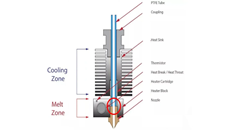
The Hotend is the part of an FDM 3D printer that deals with the melting and deposition of molten plastic material. Therefore a Hotend is composed of a Nozzle that deals with depositing the molten material, a Heatblock that deals with the melting of the material, and a Heatbreak that keeps the hot zone separate from the cold area of the Hotend. The Heatbreak can be equipped with a Heatsink, equipped in turn with a fan.

Hotends come in various shapes and sizes, however common and popular types are the Hotend MK8 and Hotend e3d V6.

Hotend MK8

The Hotend MK8 are composed of Nozzle, Heatblock, Heatbreak and Heatsink, and provide for the insertion of the PTFE tube in beat with the nozzle. This implies that the PTFE tube is inserted inside the Heatbreak, then the filament flows inside the PTFE tube and reaches the nozzle directly, without intermediate zones.

The PTFE tube, in the part in contact with Nozzle and Heatblock, tends to reach the same melting temperature set for the filament, however this is not a problem as PTFE supports temperatures up to 300 C very well, well beyond the normal printing temperatures of PLA, PETG and ABS. On the other hand, the higher the printing temperature, the greater the amount of heat that the Heatbreak must dissipate; in fact, when the heat is not dissipated properly, it tends to rise inside the PTFE causing the filament to melt in areas far from the Nozzle, resulting in obstructions that prevent the filament from passing. For this reason, it is necessary to accompany the Heatbreak with a heatsink heatsink with fan, in this way the heat passage is quickly interrupted.

The Hotend MK8 is ideal for printing most filaments, however for printing more technical materials it may be unsuitable. In fact, printing filaments that require a high temperature, such as polyamide (nylon), also require a large dissipation capacity; however, the structure of the MK8 Heatsink is not able to dissipate much heat, moreover the PTFE tube present inside the Heatbreak also begins to lose its characteristics, thus causing obstructions.

Hotend e3d V6

The Hotend e3d V6 are composed of Nozzle, Heatblock, Heatbreak and Heatsink, and provide both the insertion of the PTFE tube in batting with the nozzle and the PTFE tube in batting with the Heatbreak. This implies that the PTFE tube is inserted inside the Heatbreak, then the filament flows inside the PTFE tube and reaches the nozzle directly, without intermediate zones, or the PTFE is beaten at the entrance of the Heatbreak and the filament passes through an all-metal area before reaching the nozzle. Therefore, the Hotend e3d V6 provides two different configurations of Heatbreak, or the classic Heatbreak with PTFE or a Fullmetal Heatbreak.

The Hotend e3d V6 has an improved heatsink, with a larger dissipative surface, so it is ideal for printing most filaments, including printing more technical materials. In fact, even the printing of filaments that require a high temperature, such as polyamide (nylon), can be performed thanks to the great dissipation capacity; moreover, if the temperature is excessive for the PTFE tube present inside the Heatbreak, then it is possible to use a Fullmetal Heatbreak that does not suffer from temperature problems.

Unfortunately, due to its large size, it is often very difficult to install a Hotend e3d V6 on smaller printers, for this reason the default installation of a Hotend MK8 is often preferred, which is able to perform almost any printing option for common users with a small footprint.

https://www.longer3d.com/products/lk5-pro-fdm-3d-printer

By Software | March 28, 2023
LONGER RAY 5 Newest 20W vs. 10W vs. 5W, What's the Differences? Which One to Buy? - LONGER
LONGER RAY 5 Newest 20W vs. 10W vs. 5W, What's the Differences? Which One to Buy?

If you want to correctly engrave practically anything, you will need a laser engraver. This is because lasers are extremely precise. Because they sell the RAY5 5W and RAY5 10W engravers, the people at LONGER are a fantastic place to begin. The beam's size, power, and focal length are the key distinctions between them; nonetheless, they can engrave a significant amount of material.

If you are looking for a tool to engrave your selected object, then you should choose the model that is most suitable for your needs. Well, worry not, as we are here to tell you about the three basic types of laser engraving, their differences, and a guide to choose which one suits you according to your need. Without further ado, let's dive right in.

What Is Laser Power?

Before we learn about the three types of laser powers, let's just investigate what laser power is. The strength of the laser is what determines how much energy is taken up by the worksheet. The basic rule is that when the laser power is increased, the bend angle grows as well, reaches a peak, and then begins to fall again as the laser power is increased even further.

The higher the laser power, the more heat is absorbed, which results in a higher peak temperature and, therefore, a more incredible amount of plastic deformation at the scanned surface. This causes the bend angle to increase. After reaching its maximum, the bend angle begins to fall because of an increase in laser power.

This is primarily the result of two factors. First, the melting takes place in the region that is being irradiated at higher power, and the heat energy that is being applied is used up in the phase transformation rather than in the bending of the material. Second, when the power is increased, the peak temperature of the surface of the bottom of the vessel likewise increases.

This results in a reduction in the difference between the plastic deformation at the top surface and the bottom surface, which in turn leads to a reduction in the bend angle at greater power.

In terms of optical laser power, the vast majority of the most popular laser engravers on the market now fit into only two primary categories, namely the 5W and 10W optical power. The modules in the first category each contain a single laser diode. In contrast, the 10W modules contain ingenious optics that combine laser light from two different laser diode sources, resulting in output power that is twice as strong as that of the lower-powered modules.

What Exactly Does The "W" Stand For?

Wattage is one of the most significant aspects to consider when discussing laser cutters. It is something that you will need to specify when you first purchase the machine, and it is the factor that affects the final cutting power and speed of your project.

When the wattage rating is increased, the flow of energy also increases. When it comes to laser cutters, having a 20W laser rather than a 5W laser will enable energy to transfer at a substantially faster rate.

You can see a sequence of lasers inside the head of a LONGER RAY 5 if you crack it apart and look at the laser inside of it. However, we strongly advise against doing this. The head of the 20W laser is made up of four 5W lasers, all of which are pointed in the same direction and concentrated through the head of the laser.

Why? The purpose of this is to generate more power and more energy from a single laser beam.

Differences Between LONGER RAY 5 5W Vs. 10W Vs. 20W

The 5W, 10W, and 20W LONGER RAY 5 all share quite a few characteristics in common with one another. On the other hand, there are a comparable number of differences. Let's focus on what differentiates these machines in a series of head-to-head comparisons so that you can make the most informed decision possible about which one to purchase.

Power Of The Laser Head

Before we go any further, there is something that needs to be clarified: although the laser head is the only difference between the two, it has a significant impact on the operation of your LONGER RAY 5 laser engraver, and we will go over those differences in depth here.

Regardless of which wattage option you go with, the LONGER RAY 5 will provide you with the same framework, sensors, and attachments to use. The laser head is the only component that is different.

The LONGER RAY 5 staff refers to it as a "plug-and-play module" in their explanation. You only need two cables and ten minutes of your time to upgrade from a 5W or 10W laser cutter to a 20W model, which gives you more cutting power.

Variations in Laser Power Depend on Which Laser Head You Use and the Different Materials You Can Cut. You can improve the power of your 5W or 10W laser by purchasing a 20W module to add to it.

To put it another way, if you want a 20W, you have the option of either purchasing one specifically designed for that purpose. The only choice available to you if you want a 5W or 10W is to purchase the machine in its current state.

The benefits are significant even though the adjustment is rather straightforward. The next sections are all about the difference that the simple head swap makes.

Quickness Of Project Completion

The exact amount of time it will take to finish the project is contingent on a few different factors:

  • Quickness of the route
  • Precision in cutting depth, selection of materials, and complexity in design.
  • The depth of the etching or cut.

The remaining three of these five parameters are not dependent on your laser cutter in any way. The speed with which your laser cutter completes your job is solely dependent on the routing speed and cutting speed settings.

In this competition, the speeds of the various routes do not differ from one another. The routing speed of the 5W, 10W, and 20W is all 10000mm/min, which is far quicker than the previous generations.

Where do we stand with the cutting depth now? Here is where you'll see a significant deviation from the norm. A laser with 10W of power can cut nearly exactly twice as deep as a laser with 5W of power. When compared to the 10W, the 20W has twice the cutting depth.

This indicates that there is a theoretical difference in cutting depth that is equivalent to four times greater when going from 5W to 20W.

LONGER RAY 5 states that the difference might be very different depending on the material that is used:

When it comes to the amount of time, it will take to accomplish a project. A 20W laser cutter will get the job done the quickest, followed by a 10W laser cutter, and finally, a 5W RAY laser cutter will be the slowest.

Space For Making Cuts and Working Area LONGER RAY 5

While the chassis of each LONGER RAY 5 is the same, the cutting areas of the various configurations are also quite comparable. The LONGER RAY 5 5W and the LONGER RAY 5 10W lasers offer precisely the same cutting area, measuring 400x400mm (15.75×15.75inch).

Although the laser head on the 20W is significantly larger than that found on the 10W, the cutting area is marginally reduced. The cutting area for a 20-watt laser is 375×375mm (14.76×14.76 inch).

Although the difference isn't huge, it's nevertheless significant enough to indicate that the 5W and 10W laser cutters have a little advantage in this category.

Alternatives To Materials(Cutting Capability)

One further aspect of the topic that is connected to laser power is the many kinds of materials that can be worked with. While attempting to engrave or cut certain materials, significantly greater force and forcefulness are required.

You can work with a greater selection of materials when you have a 20W. You can also work with more substantial materials, which opens even more possibilities for the kinds of projects you can develop.

The Ray5 20W comes equipped with a powerful laser module with a 20W output. Also, this machine features the most recent generation of laser enhancement technology, which increases its capacity for cutting. It can cut through 0.002 inches (0.05 mm) of stainless steel, as well as 0.59 inches (15 mm) of pine wood and 0.31 inches (8 mm) of acrylic in a single pass.

Because of recent advancements in compressed laser technology, the laser spot may now be as small as 0.08*0.1mm2, making it possible to engrave artwork with thinner lines, clearer texture, and more attractive details. And the air-assisted interface is reserved, which allows for a wide variety of air pumps to be easily matched up with more hygienic surfaces.

While utilizing the 5W cutter, metal, ceramic, and stone become a great deal more challenging to work with, and in all honesty, the 5W power setting is more commonly used for engraving than it is for cutting. When utilizing a 5W or 10W laser cutter, most people adhere to cutting materials made of All Wood, Paper, Plastic, Leather, PCB Board, Aluminum Oxide, Non-Reflective Plating, And Lacquered Metal.

Think about getting the 20W laser if you wish to work with a variety of various types of materials. For the purposes of our projects, we have successfully cut through even the denser woodlands.

Precision

What should you do if you need to draw lines on a component that are extremely thin and accurate? In this scenario, we strongly advise you to avoid using the 20W laser head, even though the risk is still relatively low.

The spot size of the 20W laser is 0.08×0.10mm. Imagine that the laser spot is the point at which a laser pointer is pointed. If the RAY uses this laser pointer to cut, you will want the tip to be as small as it possibly can be.

The laser spots of the 5W are 0.08×0.08mm, and the 10W are 0.06×0.06mm lasers. The laser spot of the 20W laser is significantly larger.

So, if you require an accurate component, you should stick to either the 5W or the 10W.

Different Engraving Capability

Pieces can also be engraved with this type of laser cutter, which is another useful function of these machines. A small amount of material is removed from the top surface to produce designs via engraving. Because engraving does not go as deep as cutting, the power required is not as significant.

The 5W RAY's capacity to engrave is significantly improved thanks to a smaller laser point and higher precision than its predecessor. Because the component only needs one pass with the laser, and the routing speed is the same across the board for these three possibilities, the 5W is the one that should be chosen.

If you need to engrave and cut the same object, going with the 10W laser might be the best choice for you. It possesses an excellent equilibrium of slicing force and accuracy.

Make Colourful Creations

The ability to generate colorful engravings on metal is a special capability that is exclusive to the 20W LONGER RAY 5 and cannot be found on any other machine. What is the mechanism behind this? Because of the increased power provided by the 20W laser, it is capable of oxidizing metal at a variety of rates. It's hard to believe when you see it in person.

Altering the laser's power causes the metal's oxidation to occur at varying rates, ultimately producing a variety of colors. It is effective on brass, copper, stainless steel, and titanium in addition to aluminum. The only difference is the range of colors that are available to you (which depends on the metal type).

Lasers with 5W and 10W outputs are not powerful enough to accomplish this task. You'll need the 20W model if you wish to create vivid engravings on metal.

Pricing LONGER RAY 5 Laser, Available In 5W, 10W, And 20W.

What should I expect to pay for this? The distinction is not as bizarre as it may initially appear to be:

  • LONGER RAY 5W: $299.99
  • LONGER RAY 10W: $449.99
  • LONGER RAY 20W: $899.99

These are currently on discount. Hence it's high time to make a purchase.

What Different Material Can Different Laser Power Cut Or Engrave?

Cutting using a laser can be done on a wide variety of materials, including but not limited to wood, paper, plastics, glass, leather, foam, textiles, and metals. By selecting the parameters that are most suitable for the laser, one can ensure that the cuts produced are of high quality and have a smooth surface finish. On the other hand, it is not suggested to use a laser cutter for cutting certain materials, such as vinyl or ABS.

To produce the desired cut, a laser cutter operates by concentrating a high-energy laser beam on the surface of the substance it is cutting. This causes the material to burn and evaporate.

When being worked on by a laser, each material exhibits its own unique characteristics and necessitates a unique configuration of the various laser parameters to achieve a clean cut with a high level of surface finish.

Aside from that, the capacity of a laser to cut through the material is determined by the sort of laser that is being employed.

In general, laser cutting works best with natural materials like wood, paper, leather, and metals, among other things, because these materials produce no or only a limited amount of potentially dangerous by-products.

Final Takeaway

The best possible outcome will be achieved with a laser power that is tailored specifically to the constituent material. For example, engraving paper uses significantly less power than engraving wood does on average. A minimal amount of power is required to achieve an engraving that is uniformly homogenous in acrylic and is not very deep. In addition, having a higher power enables speedier work while processing engraving materials.

The software allows for straightforward control of the laser's output power. Nonetheless, the hardware has a role in determining the maximum power. The following criteria must be met: You are able to process a wide variety of materials with a laser machine that has a high laser power, which provides you with a great deal of freedom.

https://www.longer3d.com/collections/laser-engraver

By Software | February 23, 2023
The Truth about FDM 3D Printer in Real-World Business - LONGER
The Truth about FDM 3D Printer in Real-World Business

When we talk about FDM 3D Printing as a whole, the question that troubles most people is whether these printers are practical enough to be used for real-world operations. To tackle these concerns, we'll be looking at what FDM 3D printing is and whether or not it's suitable for your business, in particular.

What is FDM 3D Printing?

Fused Deposition Modeling is a process that involves heating up the filament and depositing it in layers on a build platform. This process allows for the creation of complex shapes and structures with high accuracy and detail. FDM 3D printing can be used for a variety of applications ranging from prototyping to product manufacturing.

FDM 3D printing can be used to create parts for prototypes, end-use products, or even customized items such as jewelry or toys. With the help of this technology, businesses are able to reduce their production costs while creating high-quality products with greater efficiency.

What are the Differences between FDM Printing and SLA Printing?

3D printing technology has revolutionized the way products are designed and manufactured. Two of the most popular 3D printing technologies used today are FDM printing and SLA printing. While both technologies have their advantages and disadvantages, it is not easy to determine which one is better for a particular application.

Fused Deposition Modeling (FDM 3D Printing) involves melting a plastic filament material through a heated nozzle and then depositing it in layers to build up an object. This type of 3D printing is fast, cost-effective, and can be used to produce complex shapes with high accuracy.

It is being used in a wide range of industries, such as automotive, aerospace, medical, consumer goods, and many more. With its increasing popularity, FDM 3D printing is becoming one of the most popular ways to create customized parts or objects quickly and efficiently.

On the contrary, SLA 3D printing is a revolutionary technology that has changed the way we produce products. It is a type of 3D printing process that uses a laser to cure liquid resin layer by layer, creating complex and detailed objects with high accuracy and surface finish.

Although both printing technologies are efficient in working, deciding which one will work best for you depends entirely on what outcome you are expecting.

Is FDM Printing Practical for Real-World Operations?

3D printing technology has completely changed the way we create and manufacture products. It has allowed us to print complex shapes and structures with precision and accuracy, making it a perfect choice for a variety of applications. FDM printing, in particular, is being used more and more in real-world operations due to its cost-effectiveness, speed, and scalability.

This technology has a lot of advantages over other 3D printing methods, such as its low cost and ease of use. However, there are some drawbacks to consider when deciding if FDM printing is right for your operations. The upsides and downsides have been discussed ahead.

The Perks of Utilizing FDM 3D Printing

FDM 3D printing offers a range of benefits for businesses of all sizes, from medium-scale startups to large corporations. The most significant perks of utilizing FDM 3D printing include faster production times, improved product quality, and cost savings. With FDM 3D printing, businesses can quickly create complex designs with intricate detail and accuracy while still keeping costs low.

Additionally, the technology can be used to produce highly customized products that meet specific customer requirements. By leveraging FDM 3D printing, businesses can take advantage of its many benefits and gain a competitive edge in their respective markets.

From cost savings to faster production times, FDM 3D printing can help you streamline your manufacturing process and produce quality products in less time.

The Downsides of Utilizing FDM 3D Printing

FDM 3D printing has become an increasingly popular technology for a variety of uses, from prototyping to end-use parts. While it offers many advantages, there are some downsides that should be taken into consideration when utilizing this technology. These include the high cost of materials, the slow printing speed, and the limited accuracy of parts produced.

But, all these drawbacks are concerned with the expertise of practitioners. If you are a pro in handling the printer, you can do wonders with it. Even beginners can also come up with excellent results, if they go through the detailed how-to guide for using it. Another factor contributing to these drawbacks is the quality of your FDM 3D printer. If you are using one sourced from inexpensive and unreliable manufacturer, you should expect to face these cons.

The Truth about Getting an FDM 3D Printer: Is it Worth It?

With the rise of 3D printing technology, more and more people are turning to FDM 3D printers to create custom objects. But is it actually worth getting one? FDM 3D printers offer a lot of advantages over traditional manufacturing methods, including cost savings, speed, and convenience. FDM 3D printers are now more accessible than ever.

Getting an FDM 3D printer also depends on your individual needs and goals. For example, if you need to make small-scale prototypes or models for your business, then an FDM 3D printer can be a great investment.

Worried About Getting an Effective 3D Printer: Longer May Have Just What You Need

If you're looking for an effective 3D printer that can do the job right, then you need not worry anymore. Longer has just what you need to get your 3D printing projects done quickly and efficiently.

From powerful desktop models to large-scale industrial machines, including FDM 3D Printers and Resin Printers, Longer offers a variety of options that will help bring your ideas to life. Therefore, if you're on the lookout for a dependable FDM 3D printer that won't break the bank, then Longer is the perfect choice for you.

Some of our top picks from their top-notch collection include the FDM 3D Printers, LK5 PRO, LK4 PRO, LK1, etc., and Resin Printers, Orange 4K, Orange 30, and Orange 10.

Conclusion

Ultimately, the decision of whether or not it's worth getting an FDM 3D printer will depend on what kind of projects you plan on using it for. FDM 3D printers offer many advantages over other types of 3D printing technology.

They are affordable, easy to use, and can produce high-quality prints with a variety of materials. They also have a wide range of uses, from prototyping to production parts and even home decor items.

https://www.longer3d.com/products/lk5-pro-fdm-3d-printer

By Software | February 10, 2023